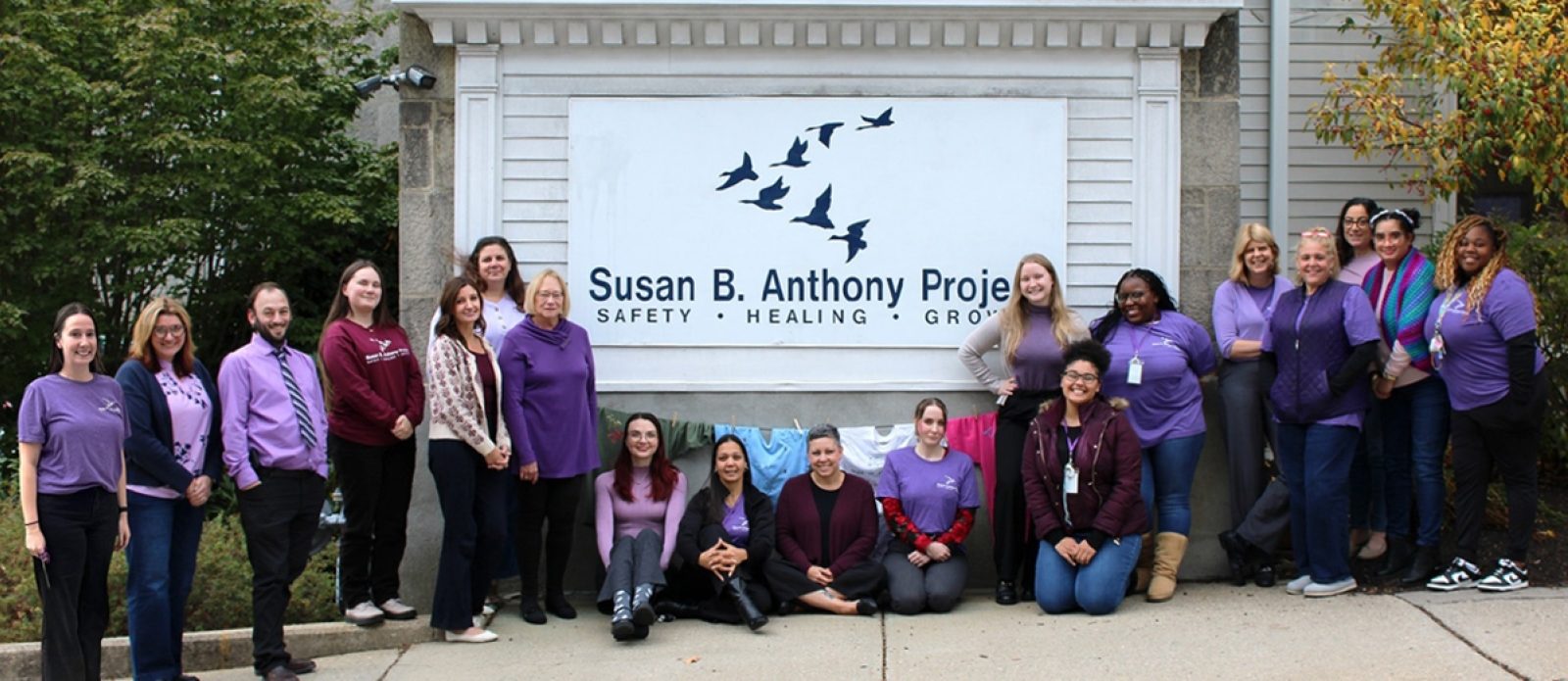
Survivors of Domestic and Sexual Violence in northwest Connecticut are charting their own paths toward stability and recovery through the Rebuilding Lives program of the Susan B. Anthony Project (SBAP). The program’s holistic approach gives survivors access to an array of services and resources from trusted partners including housing, clinical and mental health services, court advocacy, financial counseling, and job training.
Rebuilding Lives works with survivors throughout their entire recovery process; its sustained support is designed to provide a runway for recovery. It takes time and courage for survivors to rebuild a solid foundation for their lives.
“A key part of our role is to give people their autonomy back,” says Alisha Donovan, Executive Director of Susan B. Anthony Project. Restoring personal agency and choice are essential for people who have experienced a loss of control during a traumatic event, or for people who have lived with abusive power dynamics. In domestic violence situations, control tactics that keep people isolated and powerless, such as financial abuse and “tech abuse,” are common, says Donovan, preventing people from accessing banking, job opportunities, and social connections.
Rebuilding Lives' “whole person” approach recognizes the inherent resilience survivors can tap into when they have access to the right tools and resources. For some, rebuilding may begin with emergency shelter and clinical support. From there, transitional housing can provide the time and stability needed to reclaim decision-making power and begin planning what comes next. Financial assistance for up to two years can provide another measure of independence, particularly for survivors who have experienced financial abuse.
That breadth of support distinguishes Rebuilding Lives in Connecticut. It is one of only four programs in the state combining services for survivors of domestic and/or sexual violence with a housing component.
For survivors navigating medical and legal systems after a sexual assault, Rebuilding Lives provides dedicated hospital liaisons and court advocates, so survivors understand their legal rights and can make informed decisions.
Every person’s path to recovery will look different, Donovan notes, and Rebuilding Lives does not prescribe how clients should utilize services—it is SBAP’s role to listen, inform, and advocate.
As survivors rebuild the scaffolding of their lives, every daily success builds upon the next. What is most gratifying, Donovan notes, is seeing how people can eventually reclaim their own power, even after experiencing the darkest time in their lives.
One long-term client of the Rebuilding Lives program, a mother of two girls, entered SBAP’s emergency shelter years earlier and eventually moved into its transitional housing program. She and her two daughters had experienced both domestic and sexual abuse. It took a year for the mother to feel comfortable enough to leave the transitional housing unit without fear, due to the high level of stalking and violence she had experienced. However, with support, she and her girls gradually regained a sense of safety and stability, and started planning their futures.
"They really did the work," Donovan says. They met with their advocate regularly, while the mother worked part-time. When SBAP’s Rebuilding Lives program helped the mother access job training, major shifts began. The mother earned a CNA certification and began working in that field, allowing the family to move into income-based housing. The eldest daughter is now in her second year of college. Her mother started college this year and is studying to become a registered nurse.
"They can imagine their future,” Donovan says, “not just a future without violence, but a future of possibility.”
Susan B. Anthony Project’s Rebuilding Lives program is supported by Fund for the Northwest Corner.
If you or someone you know is in need of services, please call SBAP’s 24/7 hotline at 860-482-7133.