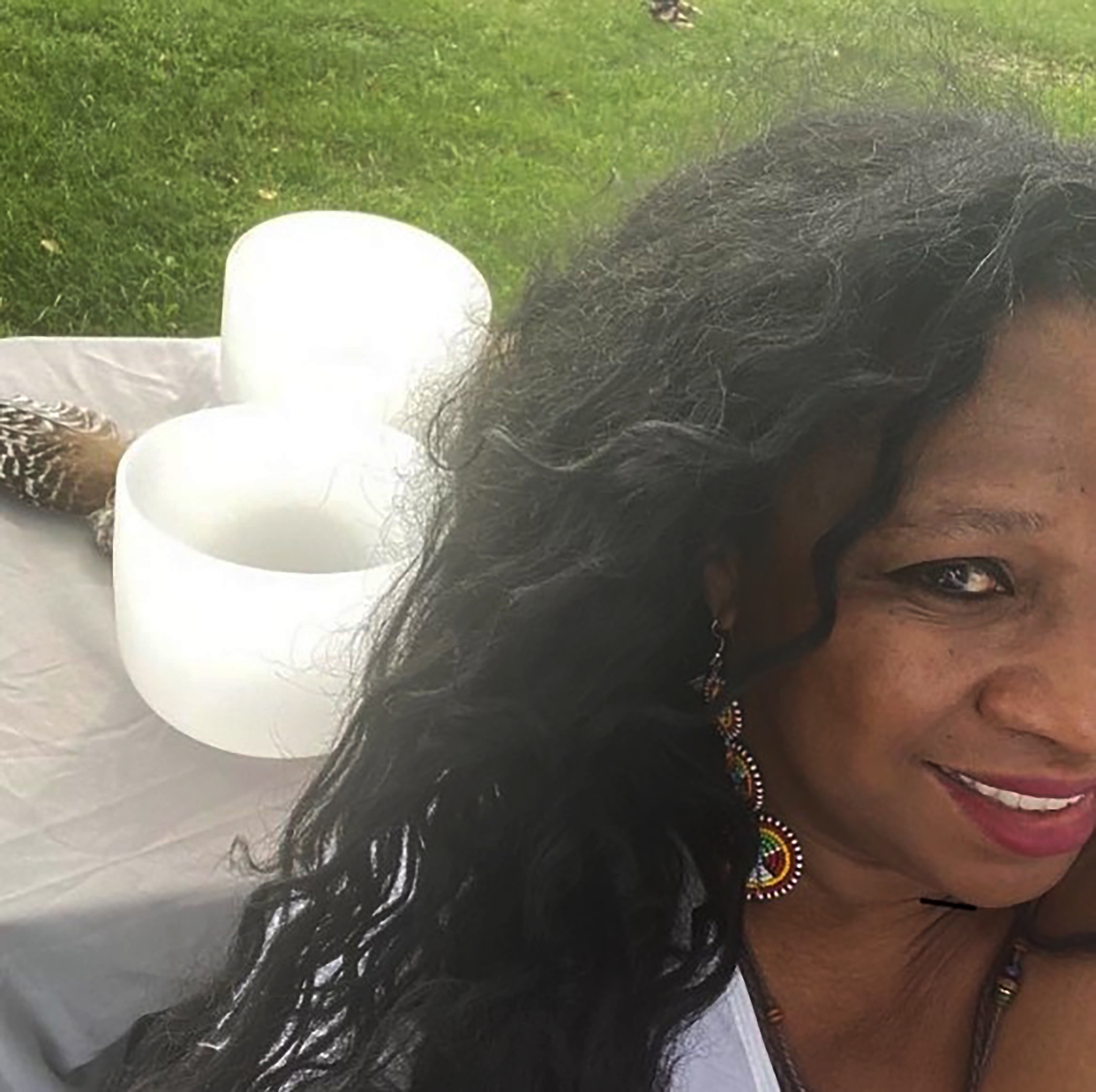
Sound Healer Sister Red Hawk (Nea McKinney) of Hudson, New York is the first Native American to receive a grant from BTCF’s Equity Fund, which supports projects that are led by and/or holistically serve the BIPOC community. Her grant provided partial funding for a week-long residency* she was awarded by High Desert Test Sites, an artist retreat and learning center in Joshua Tree, California. That learning is the foundation for two BIPOC community healing workshops she’ll create for the Hudson area in 2026: one for adults and a second for youth aged 12-18.
Sister Red Hawk is excited about creating a greater awareness of the healing properties of sound within the BIPOC community. Her identities as both a Native American and an African American inform and inspire her work. “BIPOC individuals often carry the invisible weight of microaggressions, discrimination, and systemic inequalities,” she shares. “Sound baths offer a nervous system reset—allowing the body to shift from survival mode (fight or flight) into deep rest and repair.”
Access to restorative therapies and mental health support can be challenging for the BIPOC community. For many, she shares, “traditional mental health care can feel inaccessible due to financial barriers, stigma, or a lack of culturally competent providers.” Sound healing workshops in community spaces create more accessible entry points. “It’s experiential...and it doesn’t rely on verbal processing alone, which can sometimes feel overwhelming,” she says. They can offer a safe environment for memories and emotions to re-surface and “unlock” from the body.
Sister Red Hawk believes that sound healing extends beyond its physical and mental health benefits; it can lay the groundwork for deeper self-awareness, reflection, and spirituality. Drawing on her family lineage in the Narragansett, Shinnecock, Pequot, and Wampanoag tribes of New England, she uses sound as a sacred tool to honor spirituality and ancestry. Rattles and drums often represent elements such as air, water, land, and fire, evoking a sense of grounding and belonging to nature. From her African American heritage, she brings call-and-response, voice and rhythm into her practice. “The drum itself has always been a heartbeat within diasporic African culture not only for sound, but for contact, communication, and grounding,” she shares.
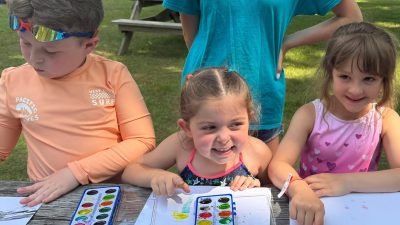
Sister Red Hawk has worked with every age group, including infants and their parents; babies are often “magically” lulled to sleep. She recently conducted a sound workshop for teens at Operation Unite in Hudson. At first, teens were a bit skeptical and fidgety, but soon became extremely relaxed. In her work with adults, some participants say their creative minds are activated, and that sound has a direct and powerful relationship to imagination and artmaking. Some, with eyes closed, “see” colors. Some feel they are tapping into a “greater power.” Some simply experience a sense of peace that is lacking in other areas of their lives and reconnect with themselves. She says, "People need ways to access opportunities for mental health care and healing in nurturing spaces where they can just be.”
Read Sister Red Hawk's blog about her residency! The Healing Bridge: How Sound Supports Art, Artists, and Community.
You can also connect with her work through her website and via Instagram: @natural7alchemy
*Sister Red Hawk’s journey to her residency at High Desert Test Sites started with encouragement to apply from Walter Sudol, founder of The Second Ward Foundation, a nonprofit arts organization in Hudson, N.Y., where she was a visiting artist. Elena Mosley, of Hudson’s Operation Unite, was her fiscal sponsor.